

What Matters Most for the Climate: Flying, AI – or What We Eat?

As sustainability discussions in corporate leadership expand beyond traditional sectors, new questions are emerging: How significant are newer sources of emissions, like AI use, compared to more familiar behaviours such as flying or dietary choices?
This comparison matters because leaders are increasingly asked to balance digital transformation, business travel, and sustainability strategies, often without seeing these impacts side‑by‑side.
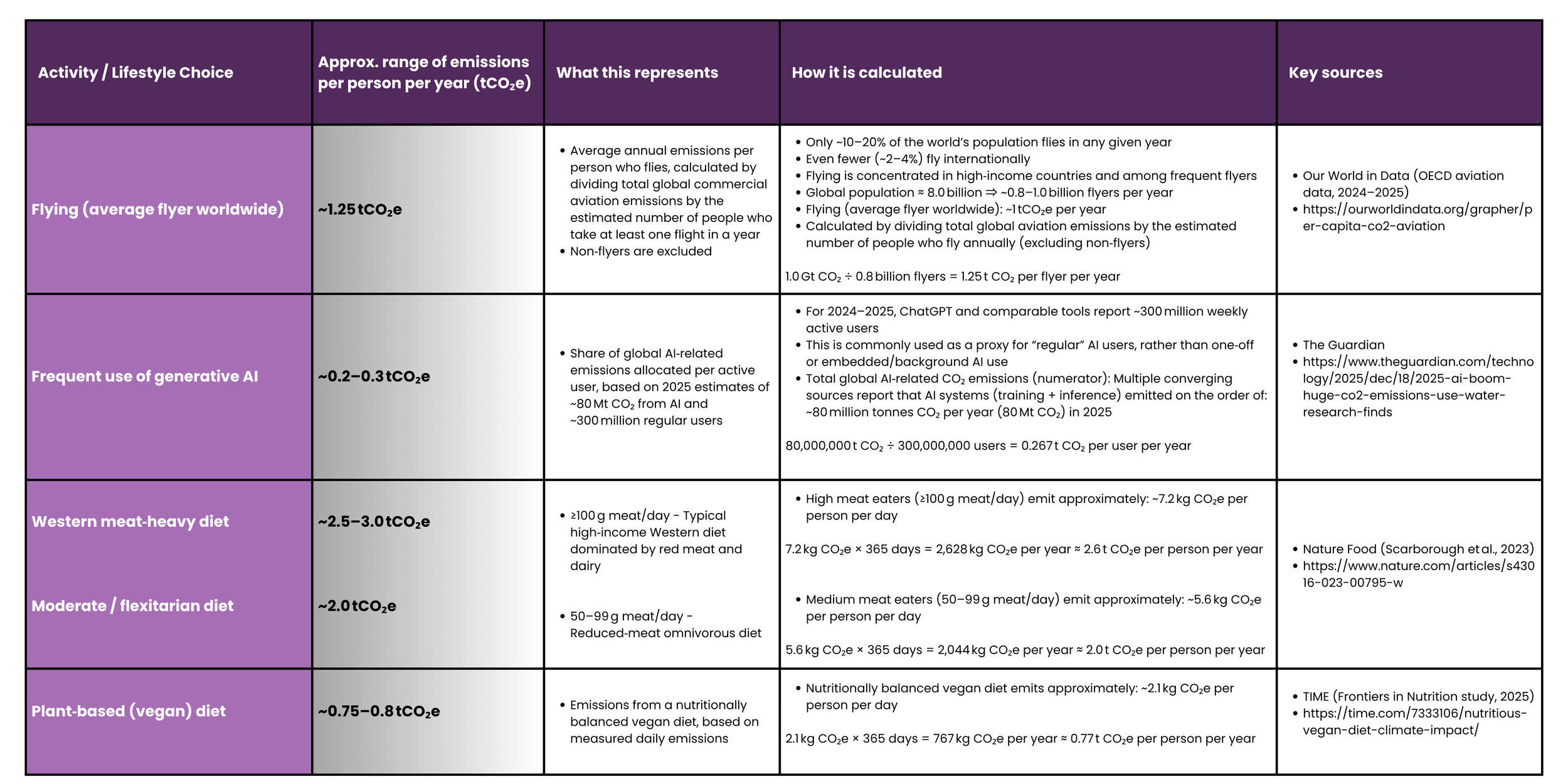
The table below compares average annual greenhouse gas emissions per person from three common activities:
Flying (commercial aviation)
Routine use of generative AI
Diet choice: average omnivorous diet vs. plant‑based diet
All figures are converted to tonnes of CO₂ equivalent (tCO₂e) per person per year and draw on the most recent credible global sources.
Average Annual Emissions per Person (Latest Estimates)
Conclusion
Taken together, these comparisons expose an uncomfortable inconsistency in how sustainability priorities are often framed. Aviation rightly attracts scrutiny, yet for the average flyer its annual emissions are around half those of a typical Western meat‑heavy diet. In other words, the climate impact of what many people eat every day can outweigh the impact of flying once or twice a year. A shift to a plant‑based diet reduces emissions by 1.5–2.0 tCO₂e per person per year, more than enough to offset the emissions from most annual flying, highlighting how disproportionately food systems shape personal carbon footprints. At the same time, AI emissions are real but often misunderstood: while total sector emissions are rising rapidly and deserve attention, per‑user impacts remain modest compared with diet choices.
For leaders serious about climate action, this evidence suggests that focusing narrowly on flights or digital tools while sidelining food is not only ineffective, but misleading. If we are to align sustainability rhetoric with real impact, dietary change, particularly a shift toward plant‑based eating, must move from the margins to the centre of climate leadership.
Gabriella Daroczi & Johanna Lorraine Hernandez Pinzon