Creating change within large organisations is rarely about demanding perfection. It is often about finding common ground, building relationships and helping colleagues see how plant-based solutions support the priorities they already care about.
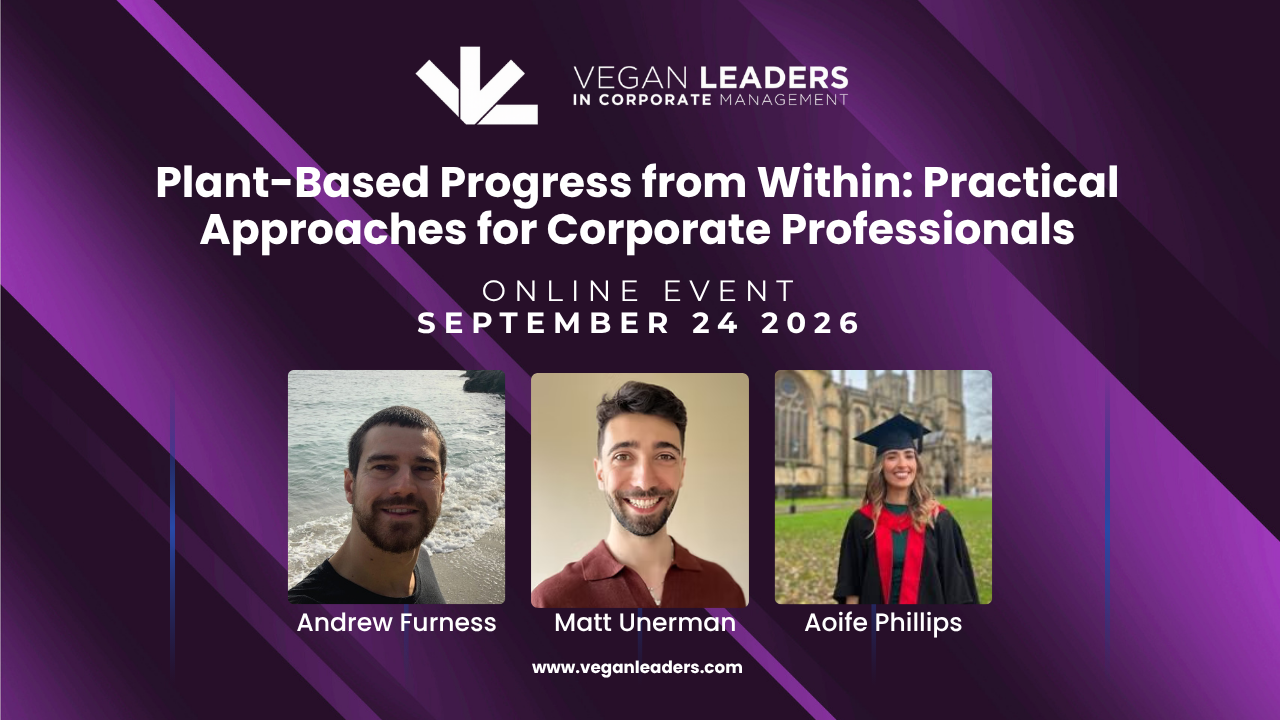
In this engaging panel discussion, facilitator Andrew Furness was joined by Matt Unerman, Iona Murphy and Aoife Phillips to share their experiences of driving positive change from within corporate environments. The conversation explored practical strategies for advancing plant-based initiatives, engaging stakeholders and maintaining resilience when change takes time.
Watch the recording to learn more about:
Why incremental change at scale can deliver significant impact over time.
How changing defaults, increasing plant-based options and reducing meat portions can shift behaviour without creating resistance.
The importance of framing conversations around your audience's priorities, whether that is business resilience, cost savings, health, food security or sustainability.
How to identify allies, build support across departments and bring plant-based perspectives into key organisational discussions.
Why resilience, patience and community are essential when working in environments that may not fully align with your values.
A recurring theme throughout the discussion was the importance of focusing on co-benefits. Successful initiatives are often framed around outcomes that resonate with decision-makers, such as saving money, improving employee wellbeing, reducing risk or supporting environmental goals. Speakers also highlighted the value of reporting on protein portfolios and encouraging organisations to rebalance protein purchasing towards a greater proportion of plant-based foods.
The panel shared practical examples of how small operational changes can make a difference, from reducing food waste and dairy consumption to embedding sustainability and animal welfare considerations into policies and procurement decisions. Participants were encouraged to consider who is in the room and adapt their language accordingly, finding shared interests and building consensus rather than leading with assumptions about what others value most.
Another key takeaway was the importance of support networks. Many people working to advance plant-based progress experience frustration or burnout when organisational change moves slowly. Connecting with like-minded professionals, sharing experiences and celebrating progress can help maintain momentum over the long term.
Further resources mentioned during the discussion:
Featured: Sourcing Stewards
Sourcing decisions in UK food businesses are made every day by people who have never had a reason to prioritise animal welfare. Many people who care deeply about animals are not in those seats, and many assume they would not be hired.
Sourcing Stewards was created to change that. The initiative helps people who care about animals build careers in food businesses, in roles that shape what gets bought, and then supports them once they are in post so they can help move companies away from factory-farmed products. It is also a route for advocates who want to create impact but cannot find a place in the nonprofit sector, where around 1,350 people are competing for fewer than 1,000 listed roles.
There are two ways to get involved:
Join the peer network. If you already work in food, procurement or sustainability, or are heading in that direction, this is a community for sharing tactics, exchanging ideas and staying motivated. Experienced professionals are especially welcome. To register your interest, email matt@sourcingstewards.org with your name and current role.
Join the waitlist for the first coaching cohort. If you would like to move into one of these roles, complete the short form at sourcingstewards.org/coaching. Selected applicants will receive one-to-one support with CVs, interviews and job applications.
To learn more, visit sourcingstewards.org.